Smart Media Albums Have Arrived. Now the Music Industry Faces Its Next Big Question.
With a new physical music category officially recognized by Luminate and Billboard, the industry is entering a new chapter in how music is packaged, purchased, measured and experienced.
October 20, 2026 | Music Industry & Technology
For decades, the physical music business has been defined by familiar formats: vinyl records, cassette tapes and compact discs. Each represented a different era in how audiences purchased, collected and experienced recorded music.
Now, another format has entered the industry's official measurement system.
On October 2, 2026, Smart Media Albums became a recognized physical music category in Luminate's sales tracking, with qualifying transactions eligible to contribute to Billboard's album charts.
It is a significant development for an industry that has spent much of the past two decades transitioning from physical ownership to digital access.
But this is about more than introducing another way to package an album.
It represents a shift in how the music industry recognizes the relationship between physical products, digital technology and fan engagement.
A New Format Enters the Charts
The introduction of Smart Media Albums marks the first major expansion of recognized physical music formats since the compact disc emerged in the 1980s.
Unlike traditional records or CDs, Smart Media Albums do not necessarily store music directly on the physical product.
Instead, they use technologies such as Near Field Communication (NFC), QR codes or other activation methods to connect a physical collectible to a dedicated digital music experience.
A music card, miniature record, keychain, badge or other collectible can provide access to an album through a smartphone.
Depending on the platform, that experience may also include lyrics, videos, photographs, exclusive recordings, artist messages and additional content.
The physical product becomes the gateway to the music.
And for the first time, qualifying purchases of these connected products have a defined place within the U.S. music industry's official album sales measurement system.
What Actually Changed on October 2?
The new category is now recognized in Luminate CONNECT, the company's music consumption and sales analytics platform.
Smart Media Albums can be tracked alongside established physical formats such as vinyl, CDs and cassettes.
However, inclusion is not automatic.
Under the initial framework, only products distributed through approved Smart Media vendors qualify for the new chart-reporting process.
The first group includes IYK, KiTbetter, Serenade, Totem, Weverse, Yoto and ZATAP.
Qualifying Smart Media Album purchases can contribute to Billboard's charts under specific eligibility and reporting rules.
The distinction is important.
A connected physical music product is not automatically a chart-eligible Smart Media Album simply because it contains NFC or QR technology.
Products must meet applicable technical, distribution, activation and reporting requirements.
The Companies Helping Define the Category
Several companies have spent years developing physical products that connect directly to digital music and fan experiences.
Serenade has established a presence in connected music collectibles, offering formats ranging from miniature records and badges to NFC-enabled merchandise.
IYK focuses on connecting physical products with digital experiences, allowing artists and brands to extend engagement beyond the initial purchase.
KiTbetter, known for its KiTalbum technology, has helped popularize connected physical music products, particularly within the K-pop market.
Weverse brings the concept into an established global fan ecosystem, where physical releases and digital engagement are increasingly interconnected.
Other participants, including Totem, Yoto and ZATAP, demonstrate how broadly the category can extend beyond conventional album packaging.
Although their technologies and business models differ, these companies share a central idea: physical music can become an interactive experience rather than a static product.
Why Physical Music Still Matters
The arrival of Smart Media Albums comes at a time when physical music continues to demonstrate its commercial and cultural relevance.
Despite the dominance of streaming, vinyl records remain a significant collectible format, while CDs continue to attract dedicated buyers.
According to Luminate, U.S. physical album sales reached approximately 1.35 million units during the tracking week ending October 1, 2026, an increase of 2.3% compared with the same period in 2025.
Vinyl accounted for approximately 748,000 units, while CDs contributed another 597,000.
Those figures reinforce an important distinction in today's music economy.
Streaming provides convenient access to enormous catalogs. Physical formats offer something different: a tangible connection between the listener and the artist.
Smart Media Albums introduce a way to combine those experiences.
Beyond the Album: The Fan Relationship
Perhaps the most important opportunity presented by Smart Media Albums has little to do with chart positions.
It concerns the relationship between artists and audiences.
Traditional physical albums generally deliver a finished recording and its packaging. Once purchased, the experience remains largely unchanged.
Connected music products can evolve.
An artist may introduce additional recordings, behind-the-scenes material, tour announcements or other content through the digital experience associated with the physical product.
Depending on the platform, artists and their teams may also gain access to engagement analytics and new opportunities to communicate with fans.
This creates possibilities for record labels, independent artists, touring performers and music marketers seeking to build lasting relationships with their audiences.
The album becomes more than a release.
It becomes an ongoing point of connection.
Chart Recognition Is Only the Beginning
The establishment of a new physical music category is a milestone, but important questions remain.
How quickly will major labels adopt the format?
Will independent artists gain broader access to approved reporting channels?
How will consumers respond to music products that require digital activation?
And perhaps most importantly, will Smart Media Albums develop into a sustainable commercial category beyond their initial chart recognition?
The answers will depend on several factors, including manufacturing costs, consumer pricing, ease of use, licensing, reporting standards and long-term access to purchased music.
Another consideration is interoperability.
Unlike a CD that can be played on compatible hardware, connected music products often depend on a specific website, application or proprietary platform.
The reliability and longevity of those digital experiences will be important considerations as the category matures.
A New Chapter for the Music Business
The introduction of Smart Media Albums reflects a broader transformation taking place throughout the music industry.
The future of physical music may not depend on choosing between traditional ownership and digital convenience. Instead, it may involve finding new ways to bring the two together.
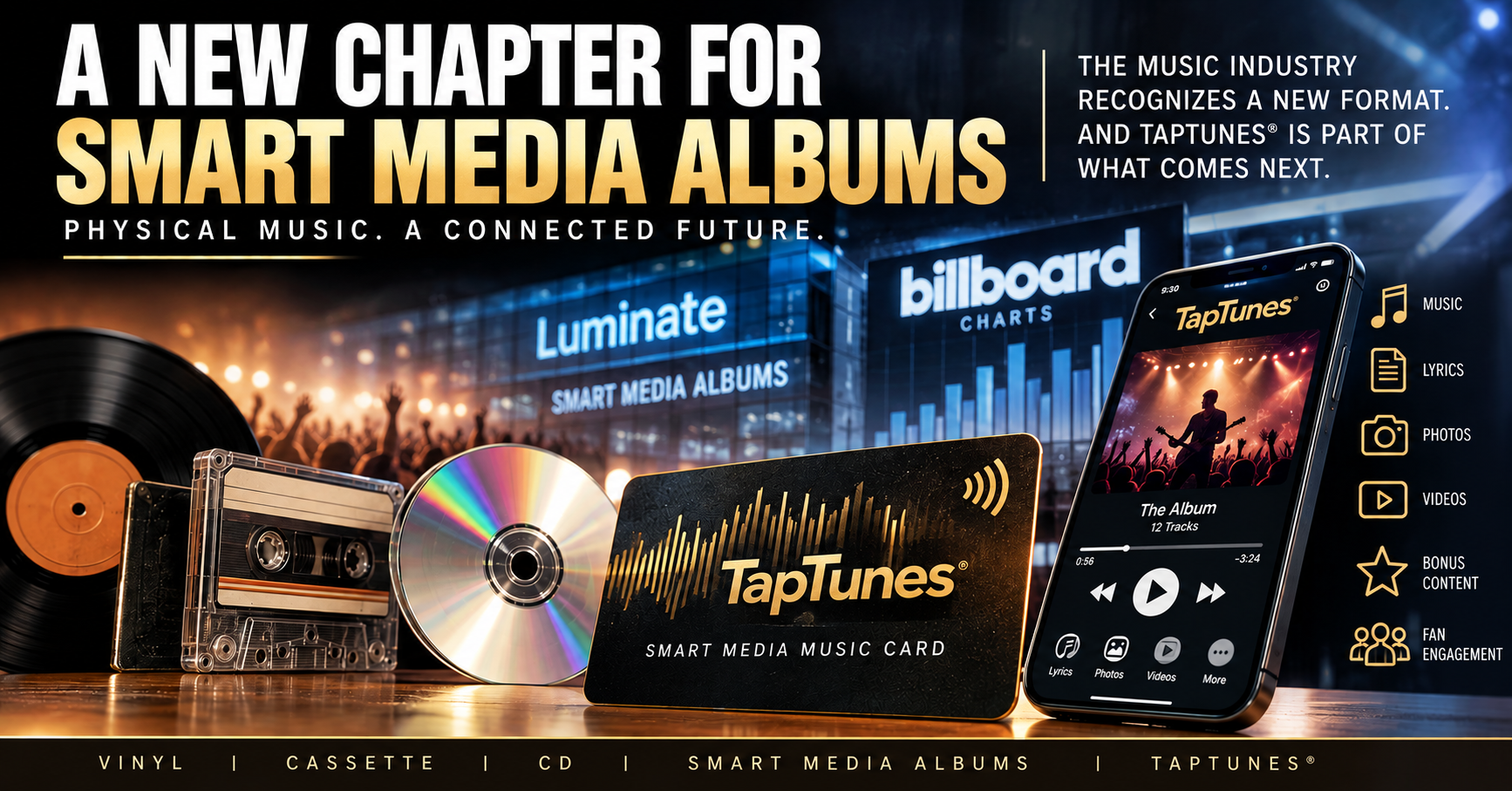
Companies such as TapTunes®, founded in 2023, have already been developing this concept through NFC and QR-enabled Smart Media Music Cards that connect physical music products with instant digital playback.
Built around the philosophy of Physical Music. Instant Access., TapTunes combines collectible music cards with a browser-based listening experience that requires no app, download, login or subscription.
Its technology also allows artists to extend the experience beyond the recording itself through lyrics, videos, photographs, bonus content and direct fan engagement.
With hundreds of artists having adopted its Music Cards, TapTunes represents part of a growing movement of companies exploring how physical music can evolve in a digitally connected world.
Although TapTunes is not participating in Luminate's initial Smart Media Album reporting test, its presence in the market illustrates how the category extends beyond the companies included in the first phase.
For artists, these developments create opportunities to develop collectible releases, offer exclusive content and establish more meaningful connections with their audiences.
For record labels and distributors, they introduce new considerations around product strategy, licensing, manufacturing and chart reporting.
For consumers, they offer another way to purchase music in a format that is both tangible and interactive.
The music industry has officially recognized Smart Media Albums. The next challenge is determining how large, accessible and enduring this new category can become.
The format has arrived.
Now comes the work of building its future.